VORTEX INTERVIEW

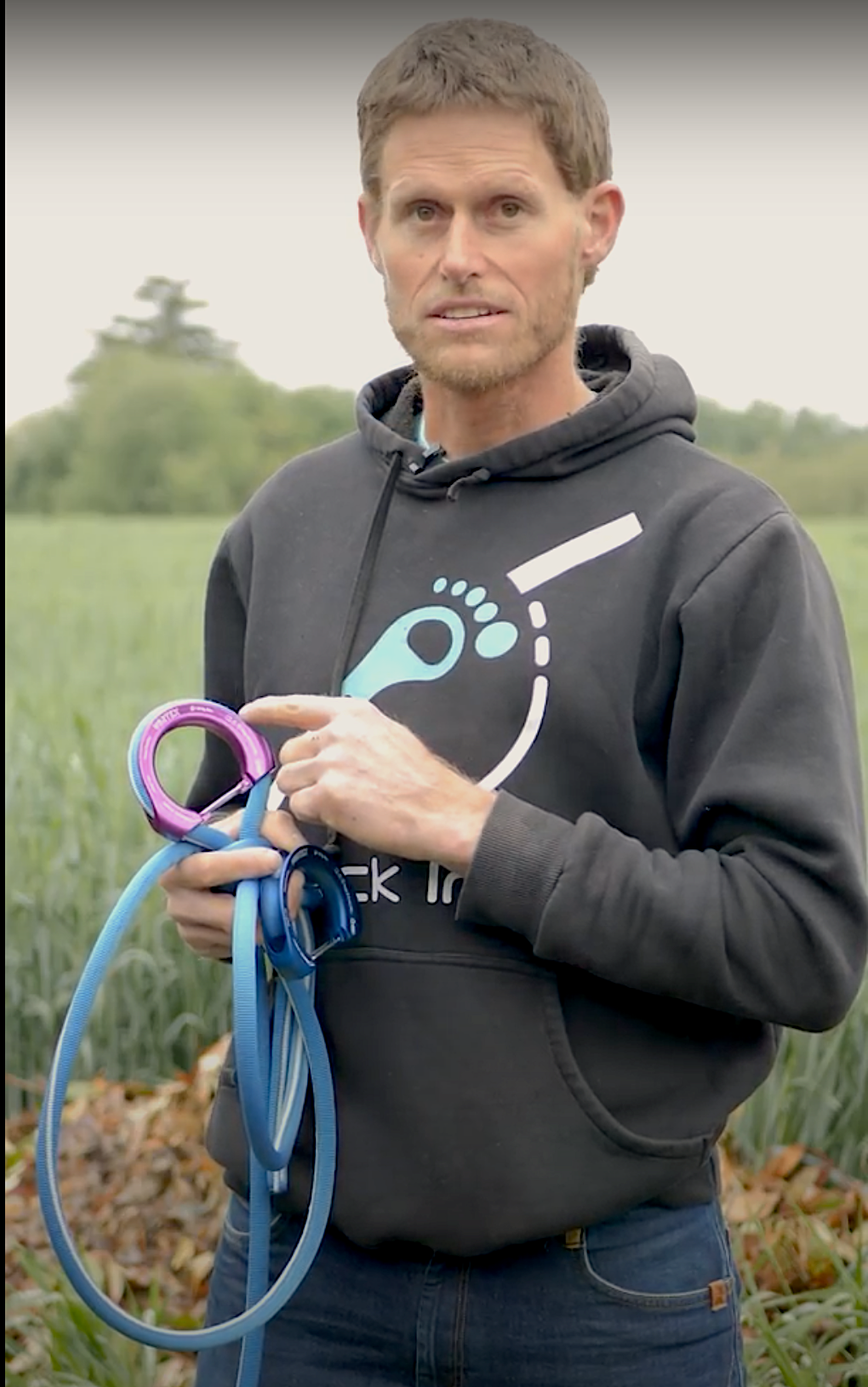
With Slack Inov's Engineer & Developer Florent Berthet

Is it easy for you to find new material or gear ideas to create? Where do you get your ideas and inspiration from? Can you tell us a bit about how the initial ideas pop into your head and what's the process afterwards?

Florent: "Inventing products is close to creating like an artist… Inspiration sometimes comes easily, sometimes it takes a lot longer.
In general, the reflection begins with an observation that I make to myself during the experience of something very specific, for example when forgetting the leashrings during a highline installation I told myself that it would be actually great to create a ring that can be inserted after connecting the line.

Once the need is specified, my brain scans among all the examples of technology that I know and that could be adapted to this new need:
-”A ring with two screwed parts like the kong lotor? Too complicated, because you need a specific tool, and there is a risk that the thread will wear out or loosen over time.”
-“A carabiner? No, an off-axis load would be too risky, and it would have to be secured by a twistlock or other aggressive bothersome system for the webbing..”
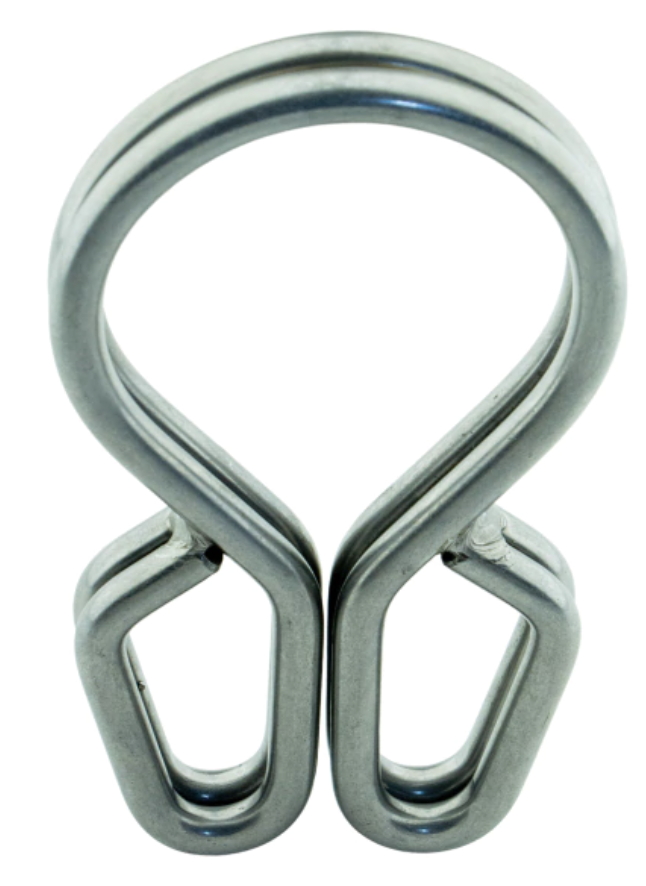
-”A heart pod? Interesting concept., but the closure is not reliable enough and there is a risk that the rope will come out of the throat.”

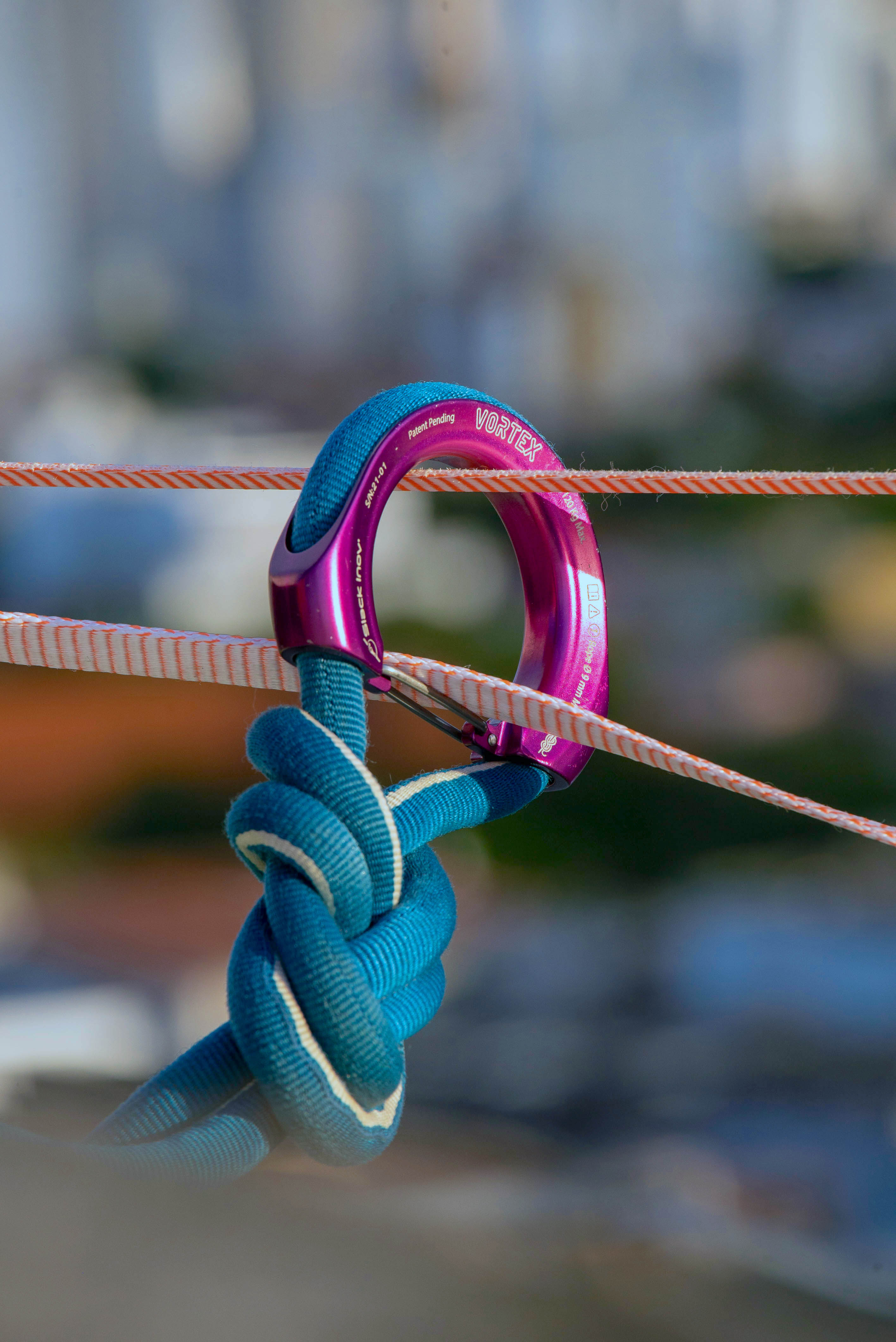
-”A simple teflon sheath on a knotted strap of the leash?” Maybe, but not profitable enough (just kidding!!) From this point on then, I try to imagine a concept, combining the advantages of each of the technologies and mixing them to better adapt them to our need: -”It would be quite a heart thimble with a snap hook. No need to secure the finger because the leash itself plays this role.” From this point, it is the engineer who takes over from the inventor, and we move on to drawings, mechanical strength calculations and prototyping production etc.."

The VORTEX 1.0 has been a piece of gear that has given Slack Inov' the reputation of being "inventive". Why do you think that is? What do you think makes the VORTEX so inventive ?

Florent: "I think all slackline manufacturers have asked themselves how to make an openable leash ring. I don't know of any highliner who never forgot to insert the leash before finishing rigging ;)
The challenge was to offer a reliable, non-aggressive product for the webbing and which doesn’t risk working the wrong axis, as is the case for a classic carabiner (an accident has already happened in the past).

For our VORTEX, I am quite satisfied with the fact that on this version of a ring, the leash, by wrapping around the ring entirely, creates and provides shock protection and an additional safety.The question reminds me as well of the ancestor Vortex: the SLACKISÛR, whose story is actually quite funny: 

Before today's VORTEX, I had imagined the SLACKISÛR as a solution, back in 2013. Its prototype was simple and very light (200g) compared to bomber rings, the reference of that time (700g of forged steel, 80kN, which some paranoid slack riders doubled for “safety”!!). Everyone who tried it at the time gave me the same feedback: “It’s really super great, but way too small, it’s freaking me out! It should be doubled in size because no one will dare to buy it otherwise…” So I listened to their advice and doubled the SLACKISÛR, which was very popular at the start, but was quickly criticised for being too heavy … ;) Developing comes with the risk of being sometimes too far ahead of time."

What do you like MOST about the VORTEX 2, do you personally use it ? You think you could have done something better?

Florent: "I find this ring super practical because it is light, with a large diameter that gets hardly stuck when passing split connections or backup loops.
I admit that I don't slack much anymore these days, only a few times a year, but yes of course: When I prepare my equipment for a highline session, I take the VORTEX 2, it wouldn't even occur to me to take anything else ;) .

We can always do better, such as incorporating a full finger with magnetic locking, forging it with better presses to save weight, changing the material to titanium... But I always keep in mind the final sale price and for each product, it is necessary to choose the best compromise between price and technicality so it stays an accessible product to everyone in the community."

Slack Inov' is selling the VORTEX 2 version these days. Is it important to not wait for a perfect version ? You could have developed 2 more years and the VORTEX would have been the 2.0 version immediately, no? Was it important to come out with a 1st version, not as perfected yet?

Florent: "Indeed, I am not very proud of the V1 which was made of polymer. At the time I did not have the means to invest in a hot forging tool and the results of wear tests on the prototypes were quite conclusive. It was a very good product that many appreciated for its practicality and lightness, unfortunately it wore out quickly, especially on abrasive webbings.

The fact of marketing allowed me to see that on the marketing level, there was demand, so I hesitated less to invest in tools of several thousand euros for V2."

Some users have declared it "risky" to use the VORTEX 2.0 for Freestyle Highlining. Is there something you would like to explain in order to reassure them ? Do you think they are right to not use it for "freestyle highlining" practice ?

Florent: "Oh yeah this one.. :), I consider this VORTEX product as absolutely not dangerous, otherwise it would not be on sale.
However, it is not the most suitable product for freestyle highlining practice, because it cannot be "padded" over its entire periphery and on very dynamic movements and rotation around the line, it will be more likely to possibly get stuck somehow, compared to a perfectly circular, closed ring like f.e. Our HIGHRING.

We had feedback from a person whose webbing jumped out of the closing gate. But photos and reports have shown us quickly, the figure-eight knot had been tied too far away from the ring, compared to the indications and presentation in the instruction manual. This is of course problematic, but not that dangerous because in this case, safety is always ensured by the double sheathed leash, tied around the webbings."

Can we ask a bit more details about your guy's "development process" ? We learned from your ABOUT US page you guys function really as a team. Is there a standard procedure ? Who takes the decisions or is it all 100% your creation?

Florent: "Even if I am the person to invent and design the products, I am not at all the only one working on our ongoing developments. Indeed we are a team. At the “Office”, we think at least three times (with Julie and Edoardo) on the strategic aspects of the product: relevance, selling price, deadlines, budget, name…
Then, during the design phase, I regularly send screenshots to my colleagues, but also to the athletes of the team who want to get involved, to ask for advice: "In your opinion, it is better to have a gate more light that will not be subject to inadvertent openings on big shocks, or a full gate, but allowing a smoother keylock? Should it be made compatible with all leash diameters, even the biggest DYI ones, or should it be made more compact?...

Once everyone agrees on the geometry, we move on to prototyping. I collect the products and carry out some tests to make sure that they are not dangerous (sometimes these tests are also carried out by my colleagues in Italy who also have a traction bench and access to the necessary machines) before testing them personally and then handing them for final feedbacks to the team of athletes, who have a much profound level of usage and therefore a perfect playground for more advanced tests.

At the end of the tests, I collect the products to analyse their actual ageing and we all take account of the positive and negative feedbacks and facts of the product.
All in order to decide if we are ready to market it, or if it needs to be modified and therefore proceed with a new series of prototypes (usually we need at least three rounds) or if we give up - and move on to something new ;) Our development process takes a minimum of 1 - 3 years on average (1 year for an easy webbing and rather 2-3 for a new product, where sometimes testing procedures need to be defined and adapted)."

Are you currently working on something as inventive as the VORTEX or the INFINITY, or are you not allowed to tell us ?

Florent: "Indeed, I am currently working on many interesting, new products !
Two of which are very innovative and may actually change the way we set-up our slacklines. I can't tell you more specifics for the moment, even if some of you have already seen some prototypes circulating, I prefer to keep it a secret until we are sure to come out on the market for real.

As you know now, our developing process permits us to decide if a product is ready for the slackworld or not, until the very last moment, so just in case, this might be better to leave as a surprise for the end of 2023..? :)"

Florent Berthet
September 2023